

Redesigning your outdoor space in SoCal means combining style with sustainability. For homeowners in Los Angeles, this requires contending with an entirely different set of modern aesthetics, drought requirements, and Homeowners Association (HOA) regulations. This guide provides spectacular, premium-value design solutions to create an exquisite modern front yard that is both appealing and compliant.
The Challenge: LA Landscape Styles, Drought, and HOA Rules
Landscaping your front yard is a challenge and opportunity in Los Angeles. Today’s homeowners desire curb appeal that is not just contemporary, but ready for drought.
Modern Landscape Design: Clean Lines and Restrained Palettes
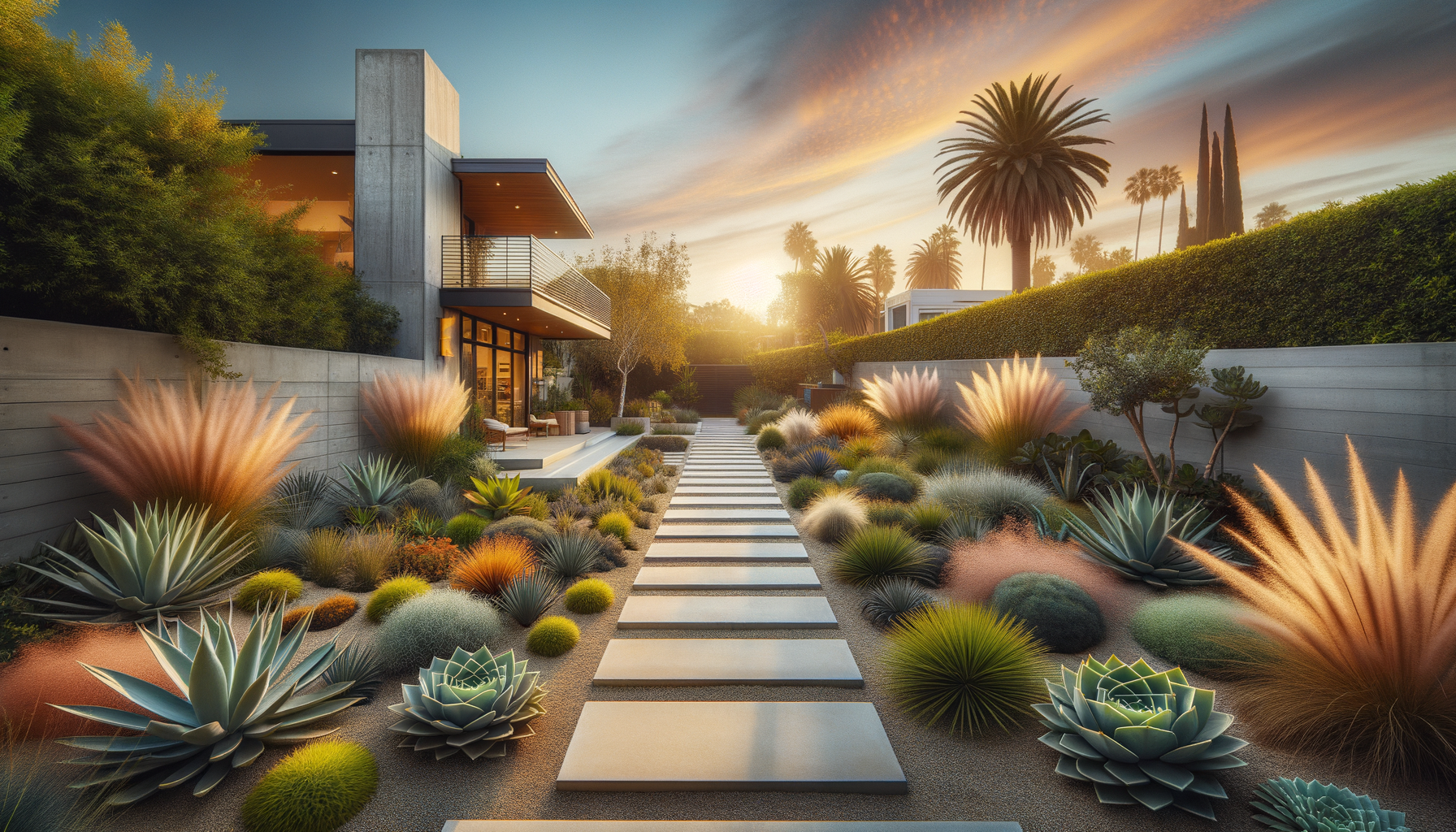
A modern landscape design is simple and functional. Embrace neat edges, muted hues, and shapes of the future. Using a minimalistic approach would mean fewer plant varieties and more use of forms and textures.
The neatness and calmness complement the sleek lines of most modern-day Los Angeles homes. We aim for a space that is free from clutter so that individual design elements stand out.
Xeriscaping: Essential for Los Angeles’ Climate
Los Angeles has a Mediterranean climate with hot dry summers and mild rainy winters. Drought-tolerant landscaping is becoming a trend and should be necessary. Xeriscaping is an essential practice where landscapes are designed to use little or no irrigation.
Incorporating water-wise plants and watering techniques helps save precious resources and contributes to a healthier local environment. It is a sustainable option that will help to reduce your water costs.
Navigating HOA Regulations for Your Front Yard
HOAs have great influence over the appearance of the community and can dictate what you can and cannot do in your front yard. It’s best to review your HOA’s Covenants, Conditions, and Restrictions (CC&Rs) before starting a project.
Typical HOA Rules Include:
- Approved Plant Lists: Many HOAs have approved plant lists (usually drought-tolerant or native species).
- Lawn Criteria: Some HOAs strictly require a specific percentage of turf or do not allow grass at all.
- There may be limits on how much of your front yard can be covered by paved areas.
- Design Review: Most HOAs require submitting and gaining approval of detailed plans.
Modern Hardscaping Materials for Los Angeles Homes
Hardscaping forms the backbone of contemporary, water-wise designs for Los Angeles homes. The non-plant elements create structure, define spaces, and require low maintenance, fitting perfectly with contemporary aesthetics.
Concrete Pavers: Geometric Pathways and Permeable Surfaces
Concrete pavers are highly popular due to their versatility and clean lines. Whatever your personal style, there are sure to be pavers that cater to it! From aged or weathered to bright or muted, an option is bound to fit your home’s aesthetic.
Permeable surfaces allow rain to percolate through the ground, and their durability provides a longer service life. This contributes to both aesthetics and environmental sustainability.
Decomposed Granite (DG): A Natural and Permeable Option
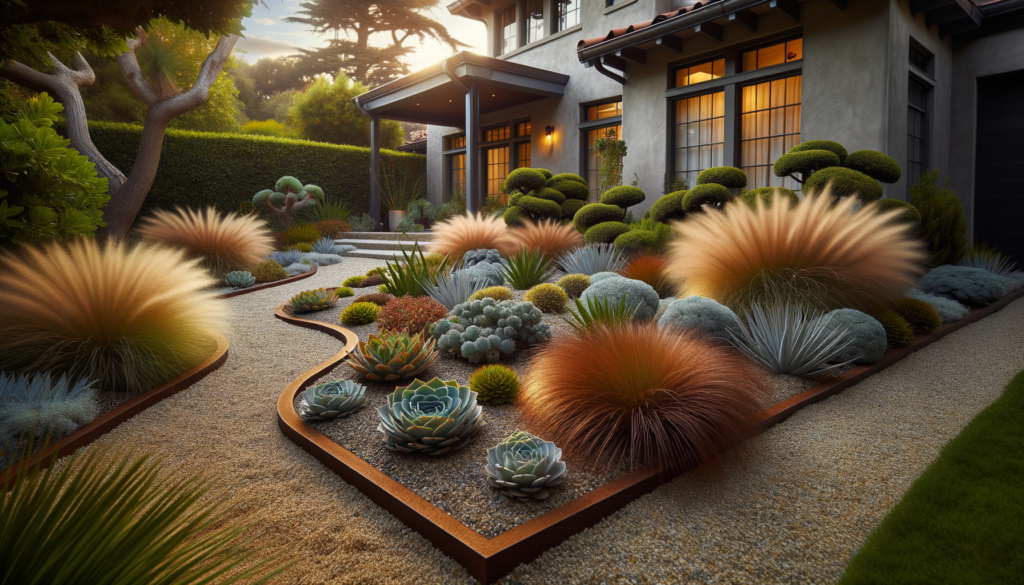
Decomposed granite (DG) can provide a natural, rustic, and refined look. This finely crushed granite material packs down hard to form a firm, porous surface suitable for pathways, seating areas, or as a groundcover.
DG is great for water conservation as it allows water to seep through naturally while suppressing weeds. It helps create comfort, softness, and warmth within hardscape elements of your yard.
Corten Steel and Metal Edging: Achieving Sharp, Clean Lines
Using Corten steel or metal edging can give you those perfect clean edges. Corten steel develops an attractive, brownish, rust-like patina that adds an industrial-chic style to your project.
Metal edging provides a clean, crisp edge to planting beds, paths, or gravel beds. It prevents materials from migrating while providing a finished look.
Ideal Plant Choices: Best Drought-Tolerant and Native Plants
The first step to creating an HOA-friendly design is choosing your plants. Modern landscapes in Los Angeles mean focusing on drought-tolerant varieties that offer bold architectural forms or closely complementary textures, often prioritizing natives for easier HOA approval.
Architectural Succulents: Agave, Aeonium, and Senecio
Today’s water-wise gardens all rely heavily on succulents. Their differing forms, textures, and ease of maintenance make them ideal.
- Agave plants have a dramatic look that draws the eye. Varieties such as ‘Blue Glow’ or ‘americana’ stun the eye.
- Aeonium is often used to add a touch of drama due to its dark-colored rosettes, with ‘Zwartkop’ being a hugely popular variety.
- Senecio serpens (Blue Chalk Sticks) offers a stunning low-growing blue-green groundcover with fine texture.
These plants flourish in full sun and need minimal water once established, making them ideal for low-water landscaping.
Ornamental Grasses: Softening Textures and Adding Movement
Ornamental grasses can add movement, texture, and a softer look to a modern landscape. These plants often create an appealing contrast with the straight lines of hardscaping and cacti.
- Mexican Feather Grass offers delicate, wispy plumes that sway gracefully in the breeze.
- Blue Fescue displays a unique bluish-gray color and is a popular ornamental grass. It makes a great border and also works well in low-maintenance gardens.
- Deer Grass, native to California, grows upright in a fountain-like shape, making it an excellent structural plant that also provides wildlife habitat.
These grasses are usually very drought-tolerant and low-maintenance, integrating nicely into a water-wise plan.
California Natives for Color and Sustainability: Salvia and Ceanothus
When it comes to sustainability and HOA approval, incorporating native California plants is smart. Locally adapted plants suit the environment, needing less water and encouraging local wildlife.
- California Lilac (Ceanothus) features beautiful blue to purple flowers in spring and offers many drought-tolerant shrub and groundcover varieties.
- Cleveland Sage (Salvia clevelandii) has purple flowers that are lovely in the garden and very fragrant, drawing in pollinators.
- The manzanita (Arctostaphylos) has beautiful reddish bark often covered with delicate flowers. Many sizes are available, from groundcovers to small trees.
These natives provide bright color and ecological value, and typically do not require supplemental irrigation.
Design Principles to Maximize Curb Appeal
Beyond the plants and materials you choose, creating a striking modern front yard is achieved through effective design principles. Applying basic design principles creates harmony and visual interest for a professional look.
Repetition: Creating Rhythm with Plants and Materials
Repetition brings forth harmony and order. When you repeat a particular planting, color, or hardscape element, you create a visual connection that is pleasing to the eye.
For example, you can use Blue Fescue grass along your walkway to guide the eye to the entrance. Using the same concrete paver material for your path as well as a small patio area has a unifying effect.
Grouping in Threes: An Easy Way to Look Professional
The rule of three states that grouping elements in odd numbers, usually three, is more aesthetically pleasing and natural. It creates equilibrium without being symmetrical.
Grouping three black planters of varying heights at your entrance will create a professional-looking entryway. You can plant three Agave ‘Blue Glow’ together to create a dramatic focal point.
Utilizing Empty Space for a Clean, Uncluttered Experience
Negative space-the empty areas around and between objects-features highly in contemporary design. Utilizing empty space provides visual breaks and highlights key design elements.
Leave some areas open with smooth gravel or DG instead of planting every square inch. The result is a clean, minimalist aesthetic that doesn’t clutter the landscape.
Intelligent and Fashionable Lighting Solutions
Creative lighting is an impactful landscaping idea for modern homes. Outdoor lighting in your front yard not only enhances its look but also improves safety and security, allowing you to enjoy the outdoors later in the evening.
Low-Voltage LED Pathway Lights: Safety and Ambiance
Low-voltage LED pathway lights add to functionality and mood. Pathway lights act as signposts that ensure safe arrival at your doorstep, helping to prevent tripping and falling in the dark.
In addition to safety, these lights offer a warm yellow illumination that enhances the ambiance of your front garden. Many of today’s fixtures are minimalist in design and blend seamlessly with the landscaping.
Uplighting: Enhancing Specimen Plants and Architectural Features
Uplighting is a technique that allows you to accentuate certain landscape characteristics. Placing a light fixture at the base of a specimen plant or architectural element produces strong shadows and highlights its form.
Use uplighting to direct attention to a lovely Agave, textured wall, or the unique bark of a Manzanita bush. Before installing any outdoor lights, check your HOA rules regarding lighting brightness and placement to avoid light pollution.
DIY vs. Professional Help: Implementing Your Project
Once the design is set, the next step is implementation. Whether you take on the job yourself or hire a professional, thorough planning will help you achieve that modern, HOA-approved front yard.
Developing an Easy Strategy for HOA Submission
You should secure HOA approval before any ground is broken. Create a detailed plan consisting of:
- An illustration clearly outlining the proposed design.
- A list of all landscape plants, hardscape materials, and lighting.
- Images or samples of the materials.
- Clearly explain how your design adheres to HOA guidelines, particularly concerning water conservation.
Submitting a comprehensive plan demonstrates your commitment and will greatly enhance your chances of approval.
When to Employ Professional Home Garden Services
Certain parts of a landscaping project can be done DIY, while others may benefit from professional home garden services. For homeowners desiring a compliant, high-quality outcome, efficient and professional assistance is invaluable.
Think about employing specialists for:
- Expert installation of advanced drip irrigation to reduce water wastage.
- Installing heavy materials like pavers, large rocks, or significant quantities of soil is labor-intensive and requires special equipment.
- Expert Plant Selection & Placement: Professionals know exactly what various plants need, how they will grow, and which designs will work best in your climate.
- A knowledgeable landscaping company often has experience with HOA submissions, ensuring compliance and saving you time and headaches.
Investing in professional home garden services ensures your modern front yard is beautiful, long-lasting, eco-friendly, and HOA compliant.
Frequently Asked Questions About Modern LA Landscaping
What are the typical HOA rules for landscaping in Los Angeles?
HOA rules in Los Angeles often include approved plant lists (favoring drought-tolerant or native species), specific lawn criteria (turf percentage or no grass), limits on paved areas, and mandatory design review processes. Always consult your specific HOA’s CC&Rs before starting any project to ensure compliance.
What is xeriscaping and why is it important for Los Angeles homes?
Xeriscaping is a landscaping method designed to reduce or eliminate the need for irrigation. It’s crucial for Los Angeles due to its Mediterranean climate and frequent drought conditions. Incorporating xeriscaping helps conserve water, reduces water bills, and supports a healthier local environment by using water-wise plants and efficient watering techniques.
What are the best drought-tolerant plants for modern LA landscapes?
For modern, drought-tolerant landscapes in Los Angeles, consider architectural succulents like Agave (‘Blue Glow’, ‘americana’), Aeonium (‘Zwartkop’), and Senecio serpens (Blue Chalk Sticks). Ornamental grasses such as Mexican Feather Grass, Blue Fescue, and Deer Grass also add texture and movement. Native California plants like California Lilac (Ceanothus), Cleveland Sage (Salvia clevelandii), and Manzanita (Arctostaphylos) provide color and ecological value.
How much does modern front yard landscaping cost in Los Angeles?
The cost of modern front yard landscaping in Los Angeles can vary widely based on project scope, materials, and whether you opt for DIY or professional services. A full professional redesign can range from $5,000 to $25,000 or more, depending on the size of the yard, complexity of hardscaping, and choice of plants. DIY projects will primarily incur material costs.
When should I hire a professional landscaper for my LA front yard project?
Consider hiring professional home garden services for complex tasks like advanced drip irrigation installation, handling heavy materials (pavers, large rocks), or when you need expert plant selection and placement. Professionals also offer invaluable experience with HOA submission processes, ensuring compliance and saving you time and potential headaches, leading to a high-quality, long-lasting outcome.
How do I get HOA approval for my landscaping design in Los Angeles?
To secure HOA approval, prepare a comprehensive plan before starting any work. This should include a clear illustration of your proposed design, a detailed list of all plants, hardscape materials, and lighting, along with images or samples. Crucially, explain how your design adheres to HOA guidelines, especially regarding water conservation. A thorough submission significantly increases your chances of approval.