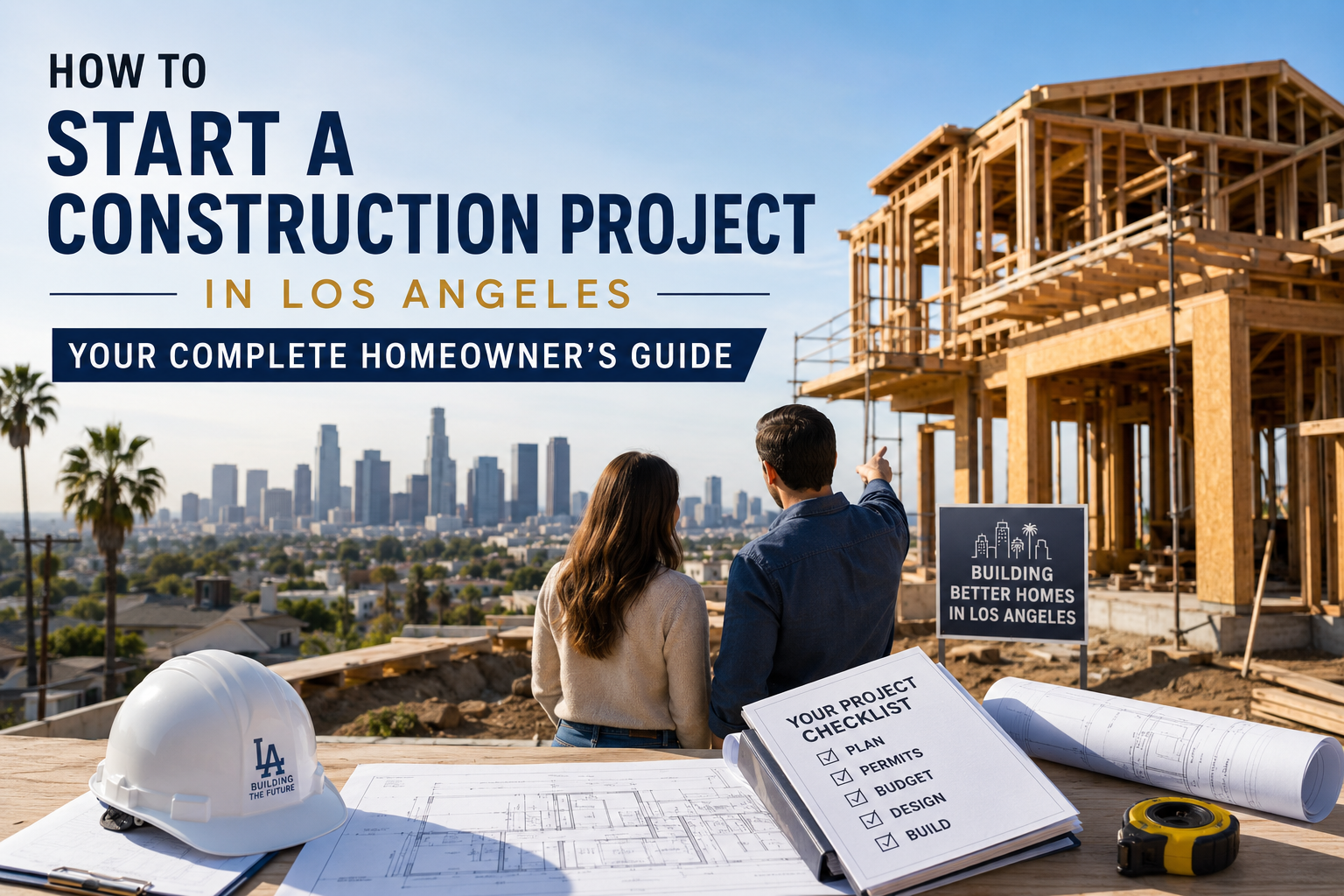
Starting a construction project in Los Angeles can be an exciting venture, transforming your dream home into a reality. However, the path from vision to completion often feels like a maze of regulations, permits, and professional choices. Many homeowners feel overwhelmed before even beginning.
Stage 1: The Feasibility Study – Is Your Vision Possible?
A feasibility study must be conducted before groundbreaking, forming the essential basis of any project. By effectively carrying out this initial due diligence, you can prevent costly surprises later. Smart homeowners look before they leap at this crucial stage.
Familiarizing Yourself With Los Angeles Zoning Laws
Los Angeles zoning laws determine what can be built on a parcel of land, covering aspects like setbacks, height limits, and lot coverage. Understanding these is essential. You can check your property’s zoning using the LA Department of City Planning online tool, ZIMAS (Zone Information and Map Access System).
Evaluating Site Limits and Prospects
Your property is unique, presenting both challenges and opportunities. Consider property access for materials and equipment, especially for tight lots in areas like Santa Monica. The topography and utility locations of a hillside property in the Hollywood Hills, for instance, will greatly influence its design and cost.
Significance of a Preliminary Title Report
An initial title report is essential. This investigation identifies any easements (a right held by another party to use your land for a specified purpose, like utilities) or liens (a claim against your property for a debt). These can directly impact construction plans and should be understood early.
Phase Two: Realistically Budgeting and Financing Your Project
Understanding the true financial picture is paramount. Realistic budgets offer clarity and control, moving beyond simple square-foot costing.
Hard Costs vs. Soft Costs: Understanding Their Meaning
Hard costs include expenses associated with labor, materials, and equipment. Soft costs, often overlooked, encompass permits, architectural and engineering design fees, surveys, insurance, and other claims. These can typically account for 20-30% of your total budget.
A Contingency Fund for Your Project Finances
It is always advisable to keep a contingency fund of 10-20% of your total project cost. This essential safety net covers unforeseen site conditions, shifts in material prices, or necessary change orders, making it a vital part of project planning.
Most Popular Financing Alternatives for LA Homeowners
Popular options include cash-out refinances, home equity lines of credit (HELOCs), and construction loans. Each has its own benefits and requirements. It is prudent to consult with a qualified financial advisor to determine the best option for your situation.
Assembling Your Dream Team in Los Angeles
Choosing an A-team for your project is one of the most important decisions you can make. Selecting professionals with the right expertise, chemistry, and communication skills truly matters.
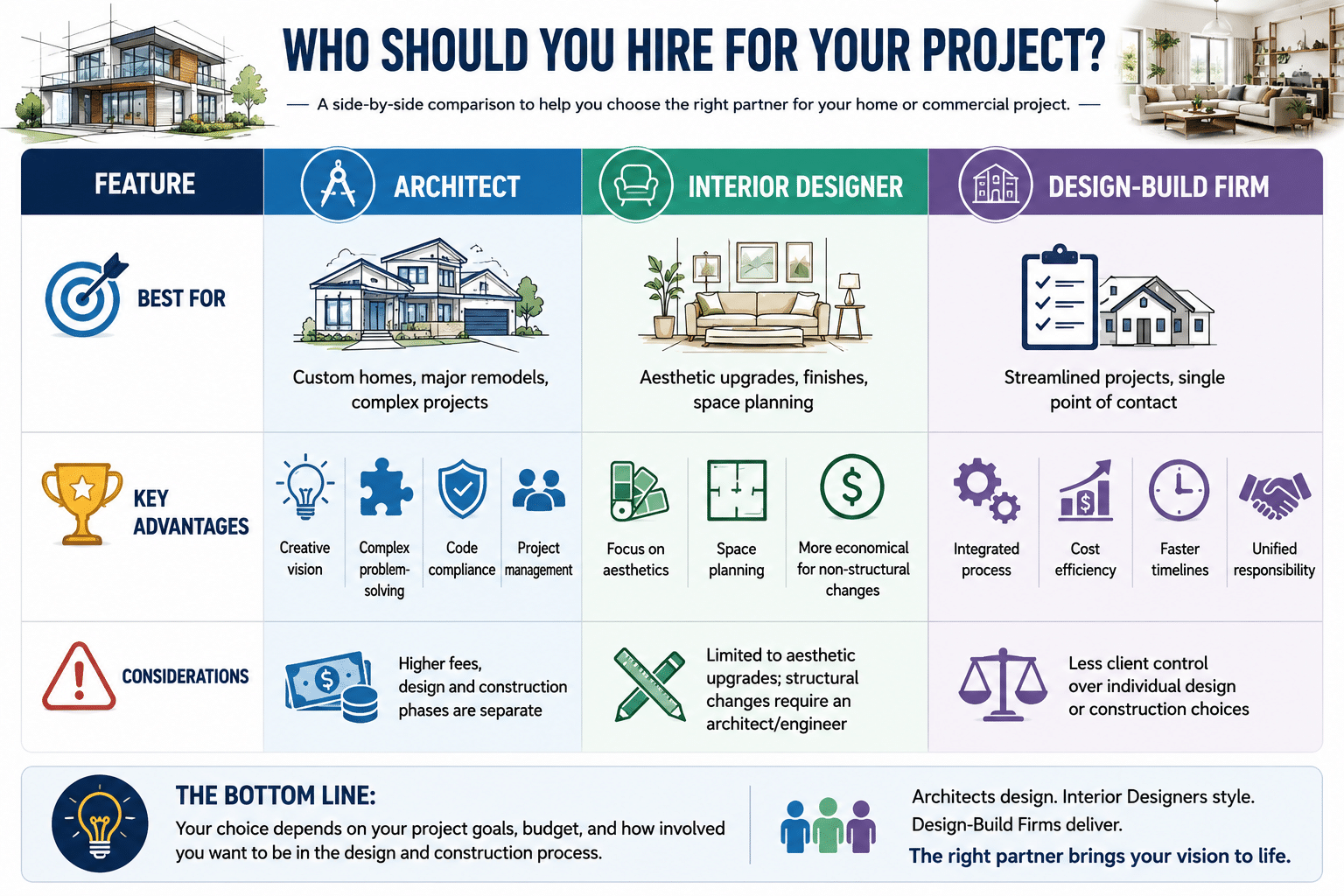
Architect, Designer, and Design-Build Firm Differences
The right design partner depends on your project’s scope and complexity. Understanding the distinct roles and benefits of each can guide your decision.
Quick Comparison: Architect vs. Interior Designer vs. Design-Build Firm
How to Find and Vet a Licensed General Contractor
The general contractor is the main project manager. For any large construction project in Los Angeles, insist on a licensed general contractor. Always check their CSLB license, worker’s compensation, and liability insurance. Reach out to past customers, preferably in your industry, and review similar project portfolios.
What is the Role of a Structural Engineer?
In a quake zone like Los Angeles, a structural engineer is a must. They design the framework of your house and ensure its stability, especially concerning load-bearing walls, foundations, and seismic retrofitting projects.
Step 4: Your Building Plan to Obtain LA Permits
The Los Angeles Department of Building and Safety (LADBS) is often cited as having the most challenging permitting process, which is undoubtedly one of the hardest parts of a construction project in Los Angeles. This is an essential construction planning guide for LA.
An Overview of the LADBS Plan Check Process
The LADBS Plan Check verifies your plans for compliance with codes. The typical sequence involves submitting plans, review, correction, approval, and permit issuance. The LADBS offers an e-plan system for digital submissions, streamlining the process.
Key Papers Required for Your Application Process
Carefully prepare the important papers. Required documentation encompasses architectural plans, structural plans, soil reports (if applicable to your project’s scope or site), and a Title 24 energy calculations report.
What’s a Title 24 Report? (And Why You Should Get One)
California has implemented Title 24, a building code ensuring energy-efficient buildings. The city enforces this state-mandated requirement for energy conservation strategies, including insulation values and window performance, making it crucial for compliance.
When Will You Get a Building Permit in Los Angeles?
Establish realistic goals for permit timelines. In Los Angeles, obtaining permits for major remodels or new construction can often take 3-6 months, or longer. This significantly impacts your overall project schedule. For current processing times and requirements, visit the official LADBS website.
Phase 5: Selecting a Contractor and Getting Bids
Finding the right contractor for your construction project in LA takes more than simply choosing the low bid. It’s about getting the best value and a trustworthy partner.
Reasons to Get Three Detailed Bids Before Making a Choice
It is necessary to obtain at least three detailed bids. This helps you establish a fair market price for your particular venture. Ensure all bidders quote on the same set of approved plans and specifications for a true ‘apples to apples’ comparison.
How to Analyze a Bid: Price Is Not All That Matters
An effective professional bid should include a detailed scope of work, allowances for materials, a clear payment schedule, and a timeline for completion. Be wary of ‘lump sum’ bids without much detail, as they are often a cause of disputes. Understand what a material allowance covers.
The Benefits of Having a Construction Contract
A handshake will never suffice. A detailed construction contract shields both parties. The contract must clearly define the scope of work, total price, payment schedule, change order process, and dispute resolution. Always consider having an attorney review this crucial document.
Pre-Construction and Mobilization Stage 6
This ‘calm before the storm’ period is a key logistics and communications phase, setting the tone for the entire build.
The Meeting Before Construction with Your Contractor
Meet with your contractor before construction starts. Confirm communication protocols, site rules, work hours, and the project schedule. Inquire about essential matters such as, ‘Who will be my daily point of contact?’ and ‘How will change orders be executed?’
Getting Ready and Informing Your Neighbors
Secure your valuables and protect existing furniture before work commences. It is good practice to inform your neighbors about the upcoming work, potential noise, and parking issues. This simple step can help avoid future conflicts and maintain good relations.
Finalizing Selections and Ordering Materials
Don’t let delays cost you. Finalize material selections and order any long-lead time items early (e.g., custom windows, cabinetry, special fixtures). Delaying an order for custom windows, for instance, could cause the entire project to wait weeks for delivery.
Phase 7: Controlling Your Construction Project
To ensure your project runs smoothly, it is beneficial to be an active, informed contributor throughout the process.
Routine Site Meetings and Status Updates
Schedule regular weekly meetings with your contractor. During this time, review work completed, discuss any problems, confirm upcoming tasks, and approve outstanding decisions. This encourages clear communication and accountability, keeping the project on track.
Managing Change Orders in the Right Way
Change orders are unavoidable, but they must be managed correctly. Any modification to the original scope should be in writing, clearly state the impact on cost and time, and must be signed by both parties before the work is done. This protects your budget and timetable.
Always Have a Project Journal to Document Everything
Keep a simple project journal. Be sure to include any photographs, conversations, and all decisions. It’s a useful tool that can clarify details and offer a timeline for dispute resolution, should the need arise.
Phase 8: Final Punch List and Project Closeout
The closure of the project is a formal process that ensures nothing is left hanging and you are completely satisfied with the outcome.
Mastering Final Inspections with LADBS
It is your contractor’s responsibility to schedule and attend final inspections with LADBS. After the work is done, it must be signed off on by the city to ‘close out’ your permit. This process may also involve receiving a Certificate of Occupancy if necessary for your project.
Creating and Completing a Task Completion List
A punch list is a written record of minor items needing correction or completion (e.g., paint touch-up, a door that sticks). Walk through the entire project with the contractor to compile this list together before the last payment.
Receiving Warranties After Final Payment
Do not make the final payment for your new home until the contractor has completed the punch list to your satisfaction and you have received all warranties for materials, appliances, and the contractor’s work. This secures your investment and provides peace of mind.
To Sum Up
A construction project in Los Angeles is a major undertaking. As this guide shows, a successful construction job involves a systematic, step-by-step process. Each stage, from understanding zoning to final inspections, is important for bringing your vision to life.
Don’t let the intricacy discourage you. Start your construction planning guide LA today by learning about your property’s zoning. With good planning and a good team, making your home the one you have always dreamt of is a great reward.
Frequently Asked Questions About Construction Projects in Los Angeles
How much does a typical construction project cost in Los Angeles?
Construction costs in Los Angeles vary widely based on scope, materials, and location. Hard costs (labor, materials) are significant, but soft costs (permits, design fees) can add 20-30% to your budget. Always include a 10-20% contingency fund for unforeseen expenses.
How long does it take to get a building permit in Los Angeles?
Obtaining building permits from the LADBS for major remodels or new construction in Los Angeles can typically take 3-6 months, or even longer. This timeline is a critical factor in your overall project schedule and should be planned for accordingly.
What are the differences between an architect, interior designer, and design-build firm?
An architect handles complex structural design and code compliance for major projects. An interior designer focuses on aesthetics and space planning for non-structural updates. A design-build firm offers a single point of contact, integrating both design and construction for streamlined projects.
What key documents are required for an LADBS permit application?
Essential documents for an LADBS permit application include architectural plans, structural plans, soil reports (if applicable), and a Title 24 energy calculations report. Thorough preparation of these papers is crucial for a smooth application process.
Why is a contingency fund important for an LA construction project?
A contingency fund, typically 10-20% of your total project cost, is vital for an LA construction project. It acts as a financial safety net to cover unexpected site conditions, material price fluctuations, or necessary change orders, preventing budget overruns.
How should I manage change orders during my construction project?
Manage change orders by ensuring all modifications to the original scope are documented in writing. Clearly state the impact on both cost and time, and obtain signatures from all parties involved before any new work commences. This protects your budget and project timeline.