The housing market in Los Angeles real estate 2026 is characterized by high prices, buyer caution and a slower but still competitive pace. This is not a crashing market but it’s also not a market where buyers can find broad bargains. Los Angeles is now acting more like a high-end selective housing market where the location, condition, and pricing strategy matter more than ever.
The problem for buyers is affordability. The challenge is realism for sellers. Properties that are priced right and well-presented still move. High-priced homes are likely to linger on the market longer.
Los Angeles Housing Market Overview in 2026
In the nation, Los Angeles remains one of the costliest major housing markets. Prices for single-family homes and condos show elevated values, although some reports indicate a year-on-year fall or flattening after the rapid gain of yesteryear. The market is expensive but is not as wacky as during the pandemic era boom.
Citywide data points show a typical home value near the mid-$900,000 range, while county-wide values remain somewhat lower but still extremely high by national standards. The pace of sales has also slowed from the fastest periods of recent years, giving buyers slightly more breathing room.
What stands out most in 2026 is the shift from urgency to selectivity. Buyers are no longer rushing into every listing, and sellers can no longer assume that nearly any home will attract multiple offers immediately.
Home Prices in Los Angeles
Home prices in Los Angeles remain the central story. Even when year-over-year changes are flat or slightly negative, the absolute price level is still high enough to strain affordability for many households.
In practical terms, this means:
· Entry-level buyers face major obstacles getting into the market.
· Move-up buyers often need significant equity from a previous home.
· Luxury and coastal neighborhoods remain more insulated than lower-priced submarkets.
· Small price adjustments can strongly influence buyer interest.
Los Angeles pricing is also highly segmented. A home in West Los Angeles, for example, can behave very differently from a home in other parts of the city. Neighborhood quality, school access, commute patterns, and local amenities all play a larger role in pricing than a broad citywide headline suggests.
For sellers, the main takeaway is simple: the market still supports strong prices in many areas, but only when the property is aligned with current buyer expectations.
Mortgage Rates and Affordability
Affordability remains the biggest obstacle in the Los Angeles housing market. Even if prices level off, monthly payments can still feel out of reach because mortgage rates continue to shape purchasing power.
A market like Los Angeles is especially sensitive to rate movement. When rates ease, more buyers re-enter the market. When rates rise or remain elevated, buyers become more cautious, stretch less, and often shift toward smaller homes, condos, or different neighborhoods.
The affordability problem affects every part of the market:
· First-time buyers are delayed or priced out.
· Move-up buyers hesitate because they do not want to trade a low existing mortgage for a much higher new one.
· Sellers must price more carefully because buyers are payment-conscious, not just price-conscious.
· Investors become more selective about cash flow and appreciation potential.
In 2026, rate trends are still one of the most important signals to watch. Even modest rate changes can influence demand in a market as expensive as Los Angeles.
Buyer Behavior in 2026
Los Angeles buyers in 2026 are more analytical than emotional. They are taking more time, comparing more listings, and focusing heavily on value. The emotional bidding wars of peak-frenzy periods are less common, though they still happen in desirable pockets and on well-prepared listings.
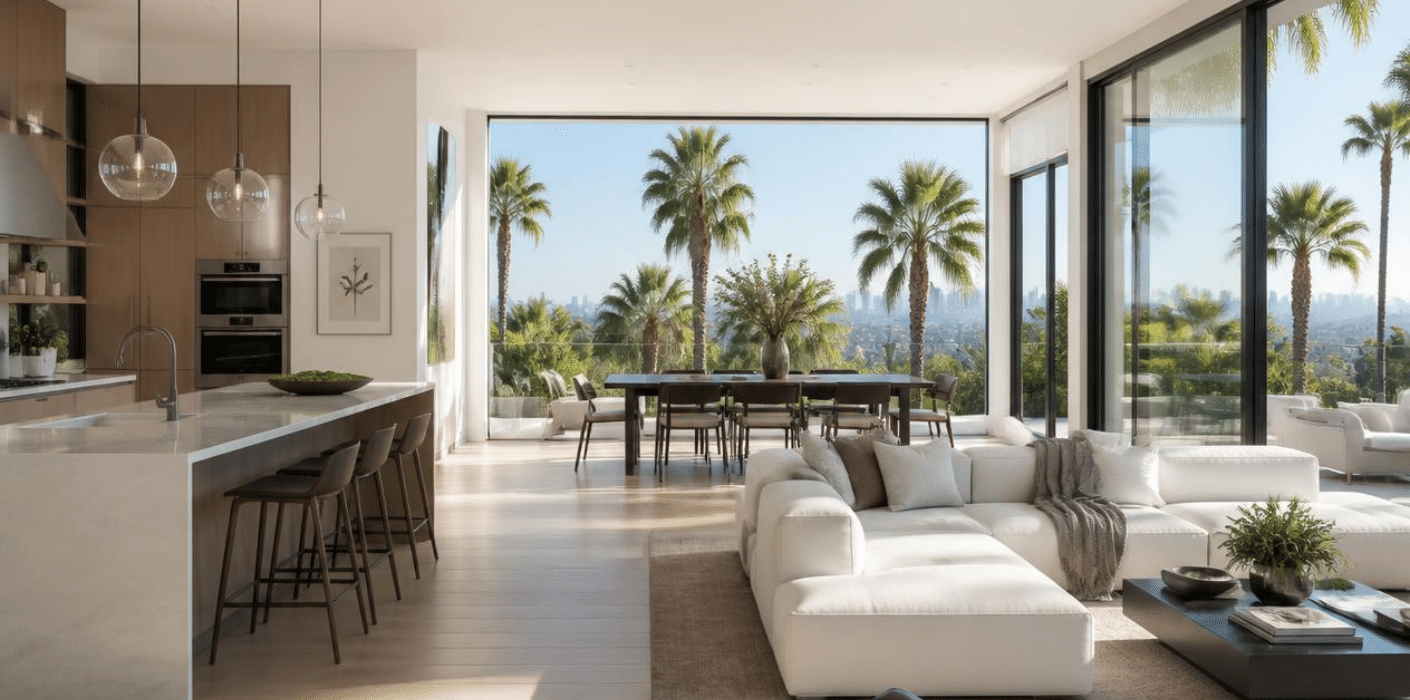
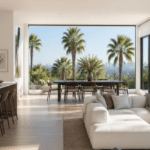
Well-staged living room in a Los Angeles home showcasing appealing decor and natural light.
Today’s buyers want three things:
1. A home that is priced realistically.
2. A property that does not require major immediate repairs.
3. A monthly payment they can actually sustain.
That makes presentation crucial. Homes that are staged well, photographed professionally, and marketed with clear neighborhood context tend to perform better. Buyers also expect more transparency. They want to know why a home is priced the way it is and how it compares to nearby listings.
In this environment, agents who can explain value clearly have a strong advantage. Buyers are not just shopping for a house; they are shopping for confidence.
Seller Strategy in 2026
Sellers still have opportunities in Los Angeles, but the strategy has changed. Success is less about simply listing a home and waiting for offers, and more about precise positioning.
The most effective seller strategies include:
· Pricing in line with current comparable sales.
· Repairing obvious issues before listing.
· Using professional photography and staging.
· Writing listing copy that highlights local lifestyle value.
· Marketing to the right neighborhood-specific audience.
Overpricing remains the most common mistake. In a market where buyers are cautious, a home that starts too high can lose momentum quickly. Once a listing sits too long, buyers begin to assume something is wrong with it, even if the issue is only pricing.
The best sellers in 2026 understand that the first two weeks of a listing are critical. That is when interest is highest and when correct pricing makes the biggest difference.
Neighborhood Differences Across Los Angeles
One of the most important things to understand about Los Angeles is that it is not a single housing market. It is a collection of micro-markets with very different pricing patterns and buyer demand.
Some neighborhoods remain more resilient because of:
Other areas are more sensitive to affordability pressures and may see longer days on market or softer pricing. This is why citywide averages can be misleading. A median price may suggest stability, while a specific neighborhood might be experiencing notable shifts.
West Los Angeles, in particular, tends to command higher pricing than the broader city and often performs differently from inland or less supply-constrained neighborhoods. Buyers and sellers should always compare against local comps instead of relying on citywide averages alone.
Is Los Angeles a Buyer’s Market or Seller’s Market?
The most accurate answer is that Los Angeles in 2026 is a mixed market. It is not clearly a buyer’s market, because prices remain high andgood homes still attract competition. It is also not the extremely aggressive seller’s market seen in earlier cycles.
The market depends on:
· Price point.
· Neighborhood.
· Condition of the home.
· How well the listing is marketed.
· How the mortgage rate environment is affecting buyers.
At lower and mid-tier price points, buyers may have more leverage than before. Inluxury and high-demand neighborhoods, sellers may still retain considerable power if the home is exceptional and priced correctly.
So the real answer is that Los Angeles is a segmented market, and the winner in each transaction depends on the property, not the citywide label.
Real estate agent showing a couple a home in a desirable Los Angeles neighborhood.
2026 Forecast for Los Angeles Housing
The most likely outlook for 2026 is continued moderation rather than dramatic change. Prices may stay flat or post only modest growth in many neighborhoods, while some areas could see minor declines depending on inventory and demand.
A few forces are likely to shape the rest of the year:
· Mortgage rates will continue to affect affordability.
· Inventory levels will influence bargaining power.
· Buyer confidence will determine how quickly listings move.
· Neighborhood-level supply will create uneven performance across the city.
That means Los Angeles is likely to remain expensive, but less frenzied. The market may reward patience more than urgency. Buyers who are prepared and selective can still find opportunities, while sellers who are realistic can still close deals efficiently.
The biggest mistake is assuming that a single forecast applies everywhere in the city. Los Angeles is too diverse for that. A strong 2026 strategy requires neighborhood-specific insight.
Conclusion
The Los Angeles real estate housing market in 2026 is expensive, selective, and highly local. It is marked by elevated home values, more measured buyer behavior, and an ongoing affordability challenge that shapes nearly every transaction.
For buyers, the opportunity is in patience and preparation. For sellers, the key is accuracy: accurate pricing, accurate presentation, and accurate expectations. The market does not reward guesswork, but it does reward strategy.